
The $22 Billion Consolidation: How the Fox-Roku Deal Rewrites the Rules for Pay TV Operators
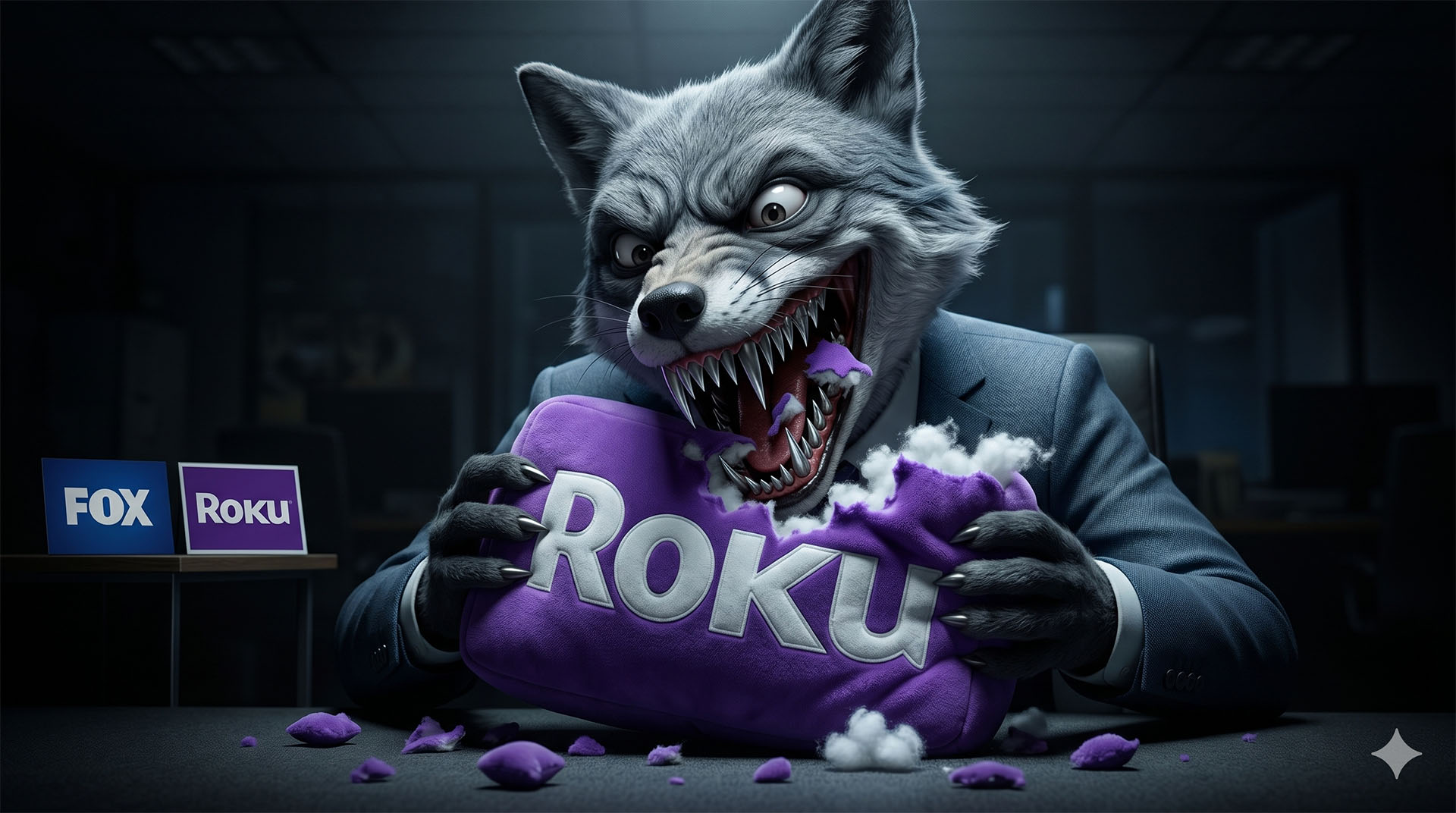
Today’s media landscape was shaken to its core by an announcement that fundamentally alters the balance of power between content creation and hardware distribution. Fox Corporation has officially entered into a definitive agreement to acquire Roku, Inc. for $160 per share in a cash-and-stock transaction valued at approximately $22 billion in enterprise value. This massive consolidation move combines Fox’s live sports, news, and entertainment assets with Roku’s market-leading Connected TV (CTV) operating system, which boasts direct access to more than 100 million global streaming households. By merging Fox’s linear powerhouses, the ad-supported streaming service Tubi, and The Roku Channel into a single vertically integrated stack, the combined company instantly scales to become the third-largest player in the United States television by share of viewing. For video service providers, regional telecommunications companies, and Pay TV operators worldwide, this acquisition is not just another headline. It represents a watershed moment, marking a permanent shift in how television content is aggregated, discovered, and monetized. The line between software platforms and premium programming has officially vanished, creating urgent strategic choices for operators who wish to avoid complete disintermediation.
The Strategic Logic of Vertical Integration
The business rationale driving this multi-billion-dollar transaction centers on data, distribution, and scale. For nearly a decade, media giants have wrestled with the high costs of building direct-to-consumer applications while relying on third-party hardware platforms to reach audiences. By purchasing Roku, Fox is successfully moving from a pure content supplier to a full-stack platform owner, securing a permanent digital gateway into living rooms across North America. From a technical and financial perspective, Fox acquires an incredibly valuable asset engine: first-party user data, an advanced targeted advertising architecture, and a dedicated operating system. Conversely, Roku receives a massive injection of capital, premium live programming, and corporate stability in an increasingly cutthroat streaming market. In the official press release published on the Fox Corporation website, titled “Fox Corporation to Acquire Roku, Inc.” (June 15, 2026), Lachlan K. Murdoch, Executive Chair and Chief Executive Officer of Fox Corporation, framed the acquisition as a pivotal turning point for the media empire.
This combination will transform the scope of our company into high-growth verticals and yield a step change in our overall growth profile. And we are executing this acquisition from a position of financial strength… Today, we take the next step: bringing together the most valuable live content portfolio in video consumption with the preeminent streaming platform through which America watches it.Lachlan K. Murdoch, Fox Corporation Official Press Release
Industry observers note that this acquisition addresses a long-standing vulnerability for Fox, which lacked a standalone subscription software anchor comparable to Disney+ or Peacock. Instead of building a subscriber base from scratch, Fox bought the largest independent gateway through which those rival apps are accessed.
The Erosion of Platform Neutrality
The structural shift this deal introduces cannot be overstated. For years, the foundational appeal of a dedicated streaming stick or smart TV box was its absolute neutrality. Consumers purchased a hardware device under the assumption that it would serve as an unbiased aggregator, treating every media application equally.
With Fox owning the underlying operating system for more than half of broadband households in the United States, that historical neutrality will inevitably come under pressure. Even though both corporations emphasized in their initial statements that Roku will continue to run as an open, partner-friendly ecosystem, competitive realities dictate that Fox will prioritize its own live sports, news, and FAST applications. Discoverability, home screen real estate, search algorithms, and button placement on physical remote controls are now directly managed by a major content provider.
Independent analysts view this as a clear signal that the era of unaligned distribution platforms is coming to an end. Commenting on the transaction for a major news report carried by CBC News, titled “Fox agrees to buy streaming pioneer Roku for $22B US” (June 15, 2026), Paolo Pescatore, a prominent industry analyst at PP Foresight, remarked on how this upends traditional media mechanics.
This gives Fox greater control over discovery, data and monetization at a time when TV viewing continues to shift away from traditional channels… Bringing together premium content, live sports, advertising and platform distribution under one roof creates a compelling proposition.
Paolo Pescatore, CBC News
If a single media conglomerate owns the application layer, the user interface, and the ad network, independent video operators must ask a fundamental question: Who controls the long-term relationship with the customer?
This high degree of vertical integration creates significant lock-in effects. For traditional Pay TV operators and broadband service providers who rely on third-party retail streaming sticks to deliver their managed video applications, this environment introduces severe operational risks. Operators face the constant threat of rising carriage fees, sudden changes to application store distribution policies, or being pushed deep into secondary menus where subscriber visibility drops significantly.
Strategic Opportunities for Regional Pay TV Operators
Fox’s multi-billion-dollar bet is a massive validation of the core business model that forward-thinking network operators have maintained for decades: owning the platform layer is the ultimate source of value.
Regional operators hold an incredibly defensive, monetizable asset. They own the physical network infrastructure, the managed set-top box in the home, the primary electronic program guide, and the trusted billing relationship with the end user. When an operator controls the primary customer interface through a robust middleware platform, they become the local gatekeeper.
Instead of yielding this territory to global tech giants or consolidated media empires, local operators have a golden opportunity to execute their own localized platform strategy. By deploying advanced video delivery software, a broadband provider can transform their managed set-top box into a comprehensive streaming aggregation hub. This allows them to bundle local linear broadcast television, premium international streaming apps, and niche on-demand content into a single, unified user experience.
The core lesson from the Fox-Roku deal is that giving up control of the user interface means giving up your share of advertising revenue, consumer data, and customer retention. Operators who invest in their own operator-tier platforms ensure they remain the primary aggregator in their local markets, insulating their businesses from the whims of international media conglomerates.
When a major content owner controls the operating system, the underlying middleware ceases to be a neutral conduit. For independent operators, this means the metadata layer, the recommendation algorithms, and the ad insertion hooks will natively favor the parent company’s ecosystem. To survive, operators must deploy independent, cloud-agnostic management platforms that protect their software autonomy.Fabrizio Capobianco, Chief Innovation Officer, Minerva Networks
Navigating the Industry Consolidation Wave
The media landscape will continue to witness rapid consolidation as the boundaries between telecommunications, technology, and traditional broadcasting dissolve entirely. Navigating this environment requires an open, flexible, and scalable architecture that allows operators to pivot quickly as market forces shift.
The technical background required to manage these transitions involves deploying next-generation cloud video solutions, implementing advanced metadata aggregation engines, and utilizing programmatic advertising tools. By maintaining strict control over the application stack, operators can defend their subscriber bases, unlock new ad-supported revenue streams, and remain completely independent of vertically integrated giants.
As the industry processes the long-term ramifications of Fox’s landmark acquisition, it is clear that the companies that control the underlying platform will dictate the future of video consumption. Service providers must decide whether they will build and defend their own digital real estate or allow themselves to be marginalized by global platforms.
Discover the Future of Managed Video Platforms
Remaining competitive in this consolidated media environment requires a technology partner that understands the critical importance of platform ownership. Minerva Networks provides advanced service management and video delivery solutions that empower operators to take full control of their subscriber experience, monetize through sophisticated aggregation, and deploy resilient platform strategies across any network architecture.
To learn more about how Minerva Networks technology can help your organization defend its market position, maximize subscriber lifetime value, and implement a future-proof video delivery strategy, visit the official Minerva Networks website to explore our comprehensive suite of solutions and technical insights.