
Fall Newsletter
Minerva is proud to announce the selection of our My Highlights feature as winner and finalists for three industry awards. Powered by Minerva’s Smart Recordings, My Highlights takes user recordings of NFL, NBA, MLS and International Soccer games and builds personalized highlight reels. Users can select highlights based on type of play or favorite player. And users can also compress the game into time they have available at the moment. Want to watch the full slate of weekend of games in an hour? Select the 10 minute option for each game. Just a couple minutes between meetings? Check out the 2-3 minute options. My Highlights is available now.



T-Commerce is Coming. Get Ready
As streaming proliferates, we also see web and mobile digital marketing methods move into the TV space. Forming and cultivating one-to-one relationships with viewers is the goal of advertisers and content owners. The result will be enablement of one screen purchases that go beyond renting a movie. T-commerce will emerge as an important source of new revenue and new user experience. Learn more about Minerva’s view of the opportunity in TVBEuropes recent e-magazine.
Read more on Page 11 of the following TVBEurope September Issue.
Covid’s Lingering and Lasting Effects on the TV Business
And how to deal with it…
July 1, 2021
As much of the US escapes from imposed COVID rules, many businesses are faced with some new realities. Current trends are proving that the post-COVID world will look different for quite some time, if not forever.
Share of wallet is being distributed a little differently. Dollars that funneled heavily into on-line retail sales and video services are flowing instead to out of home experiential businesses like restaurants, bars, and movie theaters. Those people with an average of four or more subscription services may unsurprisingly cut video services to free up time and money for face-to-face activities outside the home.
And it’s not just consumers who are changing their behavior. Covid has highlighted and accelerated an important trend in business spending as well. For example, Disney just announced that 40% of ad avails were committed to digital and streaming at the upfronts. Good news for the future of ad dollars in the streaming space, but bad news for broadcasters and those reliant on traditional one-to-many advertising models. Unless, of course, you’re nimble enough to pivot.
This year’s ad upfront season emphasized two important changes. First, the impending end of Covid bolstered higher ad prices as the promise of more new content gives new ways to get in front of key audience groups. The second takeaway is that to get premium ad rates, you have to have very large scale and reach, or you have to provide targeted, personalized ad capability along with all the analytics that goes with it. The new reality is that smaller operators that want to optimize their limited in-line video ad avails must be able to offer personalized ad insertion and tracking that you can only get with Dynamic Ad Insertion (DAI).
Enter Minerva. As evidenced by the recent upfronts, the competition for ad dollars is fierce as the balance begins to shift away from traditional and into digital. Contact us to learn more about how our video platform can help you meet the challenge of the new rules of engagement around video streaming experiences and personalized advertising.
Webinar (ACA/Minerva): Create Engagement with Differentiated Services
On Thursday June 24th, Minerva’s VP of Marketing, Matt Cuson, and the ACA’s EVP and COO, John Higginbotham, discussed what operators need to do to create value that builds on their natural strengths and key differentiators. There are four key best practices that operators around the world embrace to create a compelling video service. Minerva also has features that allow operators to build value around the content so that even if consumers have many ways to watch, viewers stay with the service that has the better overall experience with valued added services like Smart Recordings and Watch With Me.
Want to learn more? Contact us as sales@minervanetworks.com to set up a time to discuss in more detail.
YouTube-Roku Squabble Shines a Light on Dynamic Ad Insertion
Source: Next|TV
Dust-up points to power of personalization
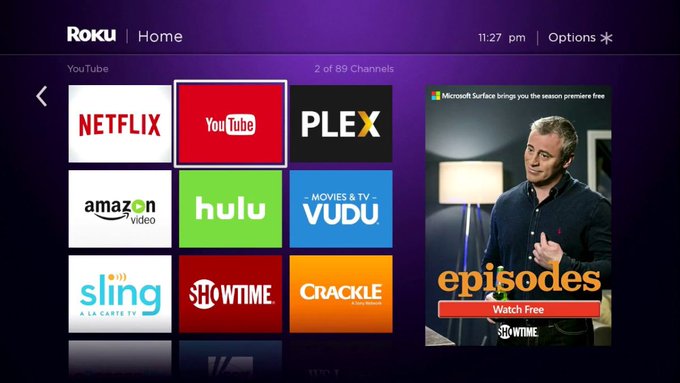
The negotiations around whether YouTube will remain on the Roku platform offer a great lesson. Both sides are posturing and blaming the other for the breakdown in decision-making. Roku has spent a lot of time and money building a platform that boasts more than 53 million subscribers. YouTube is a powerhouse that has both the eyeballs and powerful Google search algorithms to back up the popular service.
The real news for TV service providers is how this spat highlights the growing popularity of free and freemium models. It also points to the value of personalized ads and their growing importance in the world of TV advertising. These ads are specifically tailored for an individual and based on what we know about their viewing habits. YouTube has always used this model to drive higher CPMs. Roku also started off this way and has never been tied to the one-to-many broadcast advertising model. Traditional TV will need to figure this out or risk being skewered by viewers looking for more relevance in the 20 minutes of ads they’re forced to watch during an hour of their favorite shows.
I could rattle off a ton of stats that point to the power of personalization but to save time and word count, here are just two. Accenture reports that 83% of consumers are willing to share their data to create a more personalized experience. And 90% of consumers are willing to share personal behavioral data for a cheaper and easier experience, according to SmarterHQ. The net here is that while we may not love the thought of ads invading our world, personalization can make them less irritating — and for some, dare I say, enjoyable.
As the roughly $70 billion per year in U.S. broadcast ad spending moves to streaming and gets spread out over more and more content sources, new distribution and revenue models are needed. Digital ad markets don’t have the limitations of traditional broadcast advertising, where programs act as proxies for targeted demographic segments. Now the focus is on the user and ads are focused on views.
Any time any person views any content on any device anywhere, it creates a personalized ad opportunity. Even niche content can generate meaningful revenue, since advertisers can target potential buyers directly rather than using content audience type as a surrogate. Dynamic ad insertion (DAI) brings advertisers, content owners, operators and consumers together in a win-win-win-win group hug.
Offsetting Program Costs
It’s not just free or freemium services that benefit. YouTube TV started at a cost of $35 per month. They hiked it to $40 with the addition of the Turner networks. Then it went up to $50 and most recently, $65. The service keeps adding more and more content while being pressured to keep its subscription rates low. Even Google, the inventor of digital advertising business models, can’t ignore the rising cost of content. The easiest way to offset cost is to get a higher price per impression, and you do that through personalization.
Broadband and mobile service providers see video as a way to make their service stickier and drive revenue. By moving to a hosted managed cloud service, they eliminate the upfront investment cost and pay only for subscribers they sign up. This investment model sets up nicely for an ad subsidized free or freemium video service. Even if free means it isn’t first-tier premium content, people will still watch tier two entertainment. And providers can make money using dynamic ad insertion while gaining access to free, ad-supported content. Once a foothold is established with a free service, subscribers can then upgrade to premium packages.
As Roku and Google continue to argue over content availability and revenue splits, it behooves operators to heed the wisdom of famous movie lines like “follow the money.” Some OTT apps have shown they can win with a subscription-only model, but let’s not ignore the ad revenue potential of secondary content. While it may have a narrow niche appeal for some, there is a lot to choose from and the content owners are willing to give it away for a share of ad revenue.
Free and freemium content has become a viable and proven business model. It’s time for operators to embrace the future.

Viewpoint author Matt Cuson is VP of marketing and product at Minerva Networks.